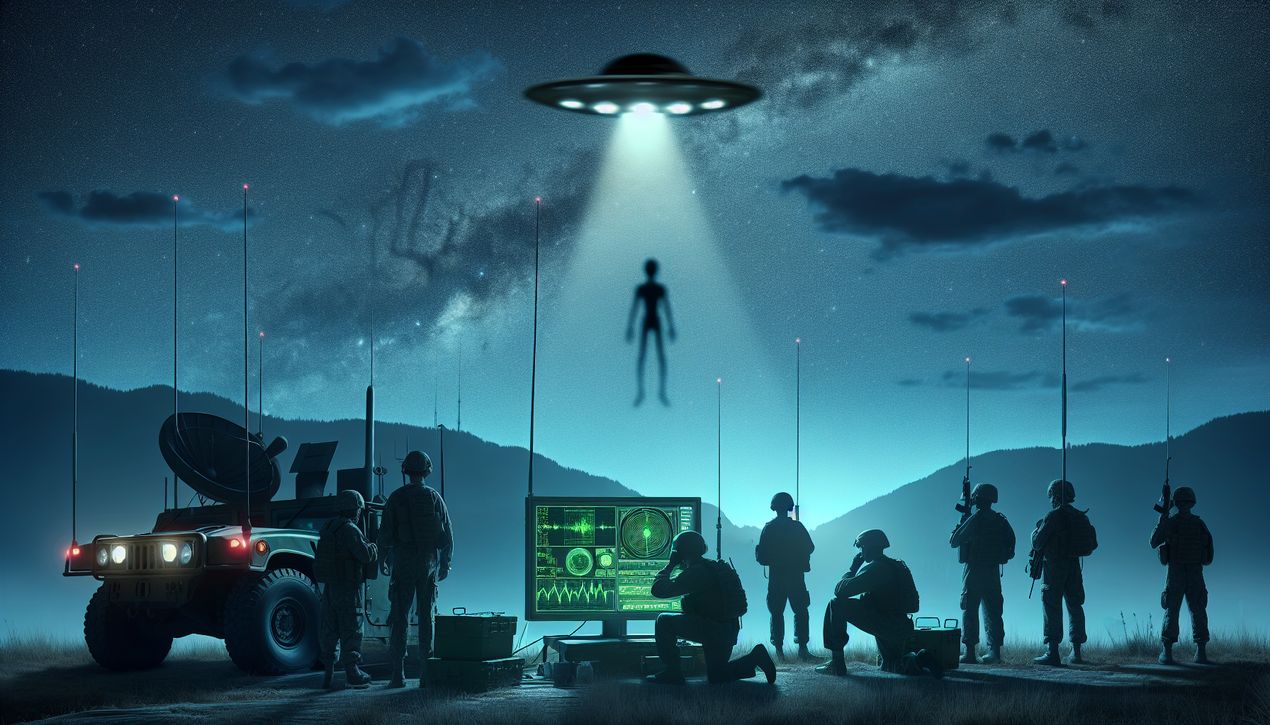
Underwater UFO Claims Spark Debate Over Military Secrecy and UAPs
Recent revelations regarding military divers who allegedly discovered an underwater UFO crash site decades ago have reignited discussions surrounding secrecy in military operations and the implications for our understanding of Unidentified Aerial Phe

Recent revelations regarding military divers who allegedly discovered an underwater UFO crash site decades ago have reignited discussions surrounding secrecy in military operations and the implications for our understanding of Unidentified Aerial Phenomena (UAPs). According to a report from Popular Mechanics, these divers spent years bound by non-disclosure agreements, a common practice in the military, which raises questions about the information that remains hidden from the public eye.
The divers, who have now come forward, described an incident involving a potential UAP wreckage off the coast of the United States. This incident reportedly occurred during routine training exercises, leading to speculation about the government's historical engagement with UAP sightings. With military interest in UAPs heightened in recent years, particularly after the release of Pentagon-taken footage showing unexplained aerial objects, the timing of these claims is notable.
Historically, the U.S. military has maintained a dismissive stance towards UFO-related theories, often attributing sightings to misidentifications of natural phenomena or advanced military aircraft. However, pressures from both the public and lawmakers have catalyzed a shift in this position, including the establishment of the All-domain Anomaly Resolution Office (AARO) to investigate UAP reports.
In light of the new claims from the divers, experts in UAP research are evaluating the credibility and implications of such underwater incidents. Researchers like Dr. Jacques Vallée and Dr. Garry Nolan have long posited that understanding UAPs may require innovative thinking beyond terrestrial standards. The underwater dimension of UAPs adds complexity to an already enigmatic field of study.
This incident also evokes reflections on previous UAP encounters documented over the years. A number of military personnel, including retired Navy pilot David Fravor, have recounted experiences with UAPs that challenge conventional understanding. Fravor, famous for his Tic Tac UFO encounter in 2004, has been an advocate for transparency regarding UAP military encounters, pointing out that such phenomena deserve thorough scrutiny.
As more veterans and former personnel come forward with their experiences, the narrative surrounding UAPs is shifting from fringe speculation to a serious investigation by credible institutions. The recent claims from the divers could serve as a catalyst for further inquiries into the long-held military secrecy surrounding UAPs, particularly in relation to historical underwater incidents.
Moreover, the intersection of military operations and UAP research raises ethical questions regarding the obligation to inform the public. As interest in these phenomena grows, so does the expectation for transparency from government entities tasked with protecting national security interests.
While the divers' revelations add a layer of intrigue to the ongoing discourse surrounding UAPs, they also highlight the challenges of balancing national security, public interest, and scientific inquiry. Whether these claims will lead to a more profound understanding of unexplained aerial and underwater phenomena remains to be seen, but they are certainly fueling discussion in a field ripe for exploration.