**Recent UAP Report Highlights Military Sightings and Government Reactions**
The ongoing discussion surrounding Unidentified Aerial Phenomena (UAP) has gained momentum following a recent release of a report that compiles various military sightings over the past year. This development has drawn considerable attention from both
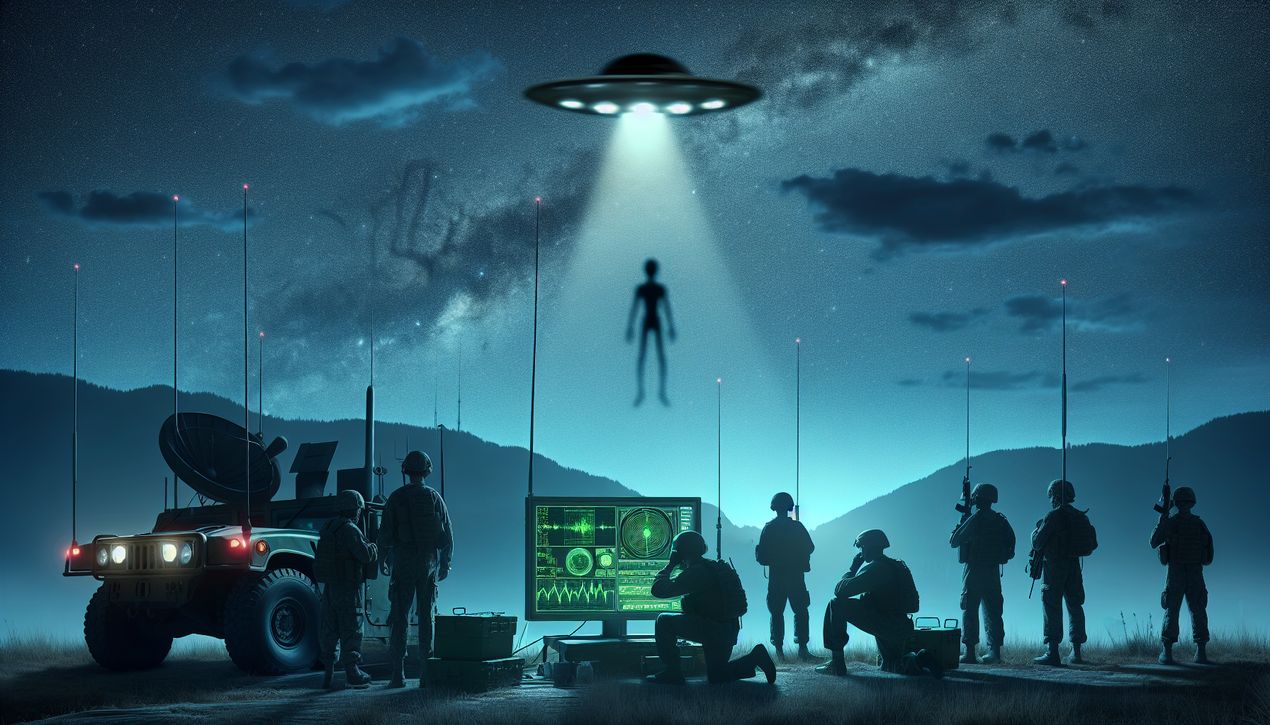
The ongoing discussion surrounding Unidentified Aerial Phenomena (UAP) has gained momentum following a recent release of a report that compiles various military sightings over the past year. This development has drawn considerable attention from both governmental bodies and independent researchers, including prominent figures within the UFO community.
The report, prepared by the Office of the Director of National Intelligence (ODNI), indicates an increase in reported UAP instances involving military personnel. Notably, the report acknowledges several encounters that occurred during training operations, echoing claims by pilots like Ryan Graves, who has been vocal about the persistent and unexplained aerial objects witnessed during missions. Graves has spoken at length about the potential implications of these sightings, emphasizing the need for military transparency and thorough investigation.
Former military pilot David Fravor, known for his 2004 UFO encounter off the coast of San Diego, has also supported calls for more comprehensive evaluations of UAP. With advanced sensor technology on aircraft today, pilots are increasingly able to document unusual aerial phenomena. This evolution in tracking capabilities underscores the need for military and governmental cooperation in interpreting and understanding these findings, as highlighted by Fravor's own experiences.
Notably, the recent report does not draw any definitive conclusions about the nature of these phenomena; instead, it emphasizes the necessity of continued research and analysis. This aligns with the work of researchers such as Dr. Avi Loeb, who advocates for a scientific approach to UAP investigations. Loeb’s theory regarding interstellar objects suggests that governments should approach the study of these phenomena with an open mind, avoiding preconceived narratives about their origins.
Meanwhile, whistleblower David Grusch has garnered attention for his assertions regarding government concealment of information related to UAP technology. Grusch's claims add an additional layer of complexity to ongoing discussions, as they suggest that some of the information gathered by various agencies may be withheld from public knowledge. This has prompted both skepticism and interest within the scientific community, as researchers like Dr. Jacques Vallée argue for the necessity of data transparency.
The recent report and evolving dialogue surrounding military sightings are pivotal moments in the broader framework of UAP research. They signal a shift towards more serious governmental acknowledgment of these phenomena, potentially paving the way for future investigations that may involve collaboration between the military, scientists, and independent researchers.
As discussions continue, key figures in the UFO community are likely to keep pushing for further clarity. Activists and researchers alike are looking toward not only new reports but also the scientific method as a potential pathway to unveil the truth behind UAPs. The evolving landscape of UAP reporting underscores a collective desire for understanding, supporting the notion that exploration and inquiry must remain at the forefront of this complex phenomenon.