The Night Pilot Mark Muscat Flew Through Six UAP Lights Over Adelaide
It was a cold, clear Wednesday—June 3, 1998—when private pilot Mark Muscat banked his Piper Arrow over Adelaide’s coast for a routine night-scenic. A German tourist sat beside him, city lights fanning out to the east, the Gulf of St Vincent to the we
It was a cold, clear Wednesday—June 3, 1998—when private pilot Mark Muscat banked his Piper Arrow over Adelaide’s coast for a routine night-scenic. A German tourist sat beside him, city lights fanning out to the east, the Gulf of St Vincent to the west. Around 9:00 p.m., at roughly 2,000 feet and heading back toward Parafield Airport, Muscat saw something he couldn’t place: six pale orange lights, dead ahead.
At first, he told himself they were fishing boats—an easy mistake from altitude when the horizon smears sea and sky. Then one of the lights darted, quick and deliberate. Boats don’t do that. The formation was airborne—and closing. Muscat radioed Adelaide air traffic control to check his situational picture. The answer came back dry: radar showed only his own aircraft up there.
The six lights appeared to spread as if to give way, then held their line. There were no nav strobes, no anti-collision beacons. As the distance collapsed, the lights resolved into discrete objects flying at staggered heights, clustered close. On the ground beneath them, residents along Semaphore Beach were also watching, phoning police about a string of orange orbs that would pause to let stragglers rejoin before moving on—behavior that, to multiple witnesses, looked coordinated.
Muscat nudged the Arrow, threading the gap. The objects slipped past on either side—about 20 meters from his wings, he estimated. No engine note. No wake turbulence. No radio static. And crucially: no wings, at least none he could discern in the few seconds they were abeam. He put their speed near his own—about 200 km/h. Without a rear window, he lost visual as they went by. Back on the radio, the reply was the same: you’re alone up there.
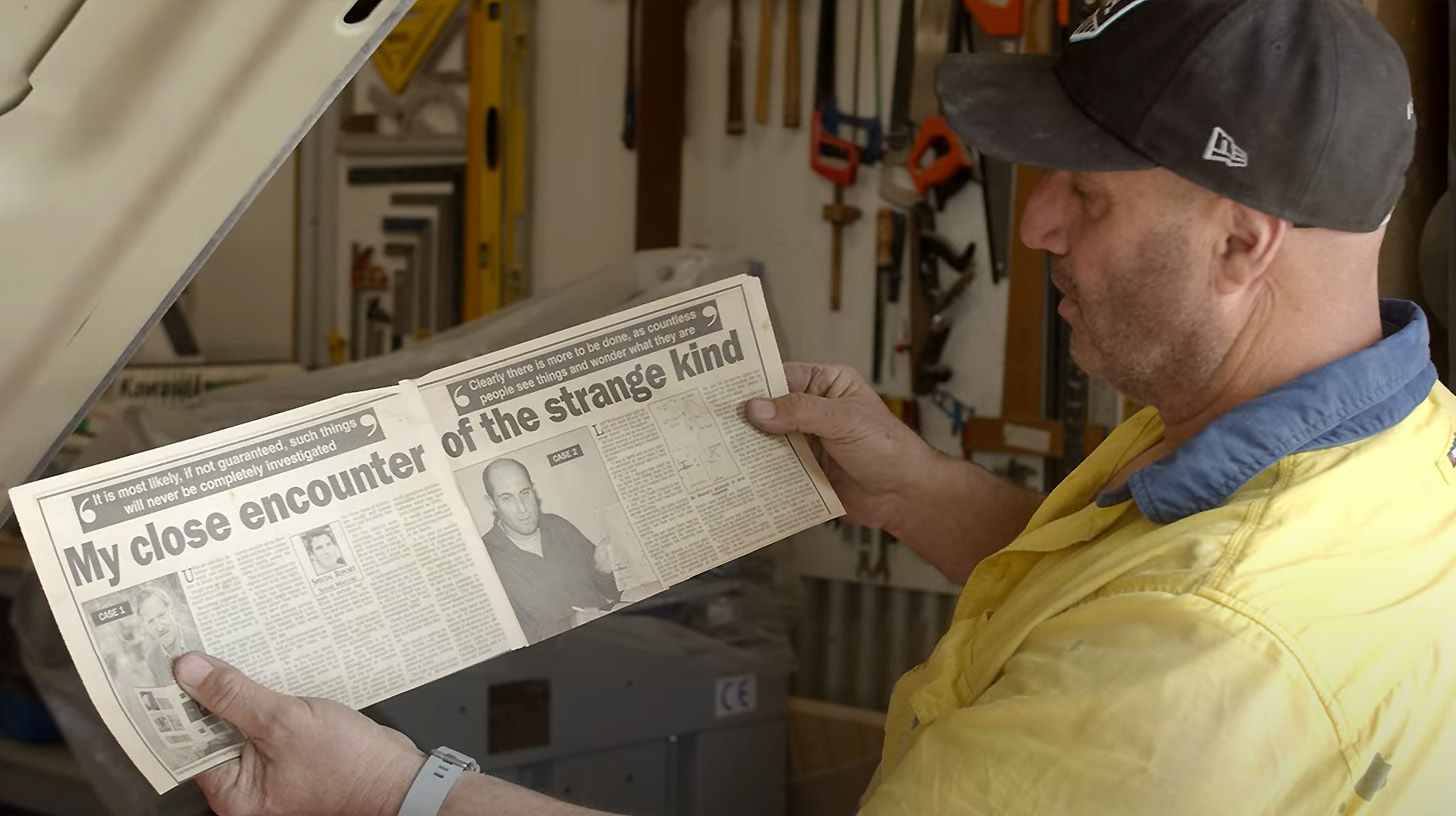
Four days later, Adelaide’s Sunday Mail carried the story, quoting Muscat—then 37, from Richmond—on the baffling absence of noise, lights, radar returns, or wake, and on how the encounter rattled him only after he learned others on the coast had seen the same orange procession. There was no formal investigation, he was told; no official explanation would be forthcoming. (https://rense.com/ufo/ozpilot.htm?utm_source=chatgpt.com)
The case slipped into South Australian lore, resurfacing when mainstream outlets revisited local UAP stories in the wake of renewed global debate about military reporting and whistleblower claims. In 2023, The Advertiser profiled Muscat, framing the event in the same unresolved terms: not from around here, and still not explained. Adelaide Now
What could it have been?
Skeptical possibilities exist, as they should. Temperature inversions can produce mirage-like reflections that mimic lights above the horizon; one Adelaide discussion thread has floated a bright star—Aldebaran—as a candidate for a multi-image ducting effect. But miraged stars don’t part and rejoin, match an aircraft’s speed, or slide past a cockpit at an estimated 20 meters with simultaneous ground-witness reports of a moving formation. Those claims don’t falsify the atmospheric idea outright, but they push it to its limits. Reddit
Could it have been aircraft? The lack of nav lights and the absence of wake or radio interference count strongly against that, as does air traffic control’s assertion that only Muscat’s transponder was on scope. (Low-RCS targets or non-transponder traffic can elude radar, but six objects, moving in a coordinated cluster through controlled airspace, would be an outlier.) Muscat also reported no sound—odd if he’d been overtaken by a loose gaggle of light planes or helicopters. (https://rense.com/ufo/ozpilot.htm?utm_source=chatgpt.com)
What about flares or lanterns? Flares drift, decay, and don’t usually hold formation with an airplane at 200 km/h; lanterns are slower still and were far less common in late-90s Adelaide. Again, not impossible—just a poor fit for the reported kinematics, the near pass, and the ground calls describing “wait and rejoin” behavior. (https://rense.com/ufo/ozpilot.htm?utm_source=chatgpt.com)
A pattern—or just a rhyme?
The Muscat encounter sits in a broader, often messy, catalogue of “lights-in-formation” cases. The most famous of the 1990s—the Phoenix Lights of March 13, 1997—produced thousands of witnesses and competing narratives. Portions of that event were later tied to military flare drops, while other testimony insisted on a structured, silent object. Whatever one thinks of Phoenix, it shows how the same motif—amber lights in geometric arrays—can straddle both mundane and extraordinary explanations depending on the details. Muscat’s details remain stubborn. Wikipedia
Twenty-seven years on
Today, Muscat occasionally revisits the night publicly—part of a small wave of pilots bringing forward older cases as stigma recedes. The bones of his report haven’t changed: six orange objects, no conventional signatures, a close pass that should have produced wake and sound—but didn’t. Without radar tapes, official incident logs, or corroborating sensor data, the case is destined to remain a witness-led mystery. But it’s a disciplined witness, with a cockpit vantage point, and a shoreline of civilians backing him up.
If you were on Semaphore Beach the night of June 3, 1998—or working Parafield or Adelaide TCU and remember calls about orange lights—drop us a line. A single overlooked log entry or callout could turn a great story into a documented case file.