
Tehran 1976: Unpacking the Most Documented Government UAP Encounter in History
The Tehran 1976 UAP incident remains one of the most compelling and well-documented encounters, involving military engagement and radar confirmation.
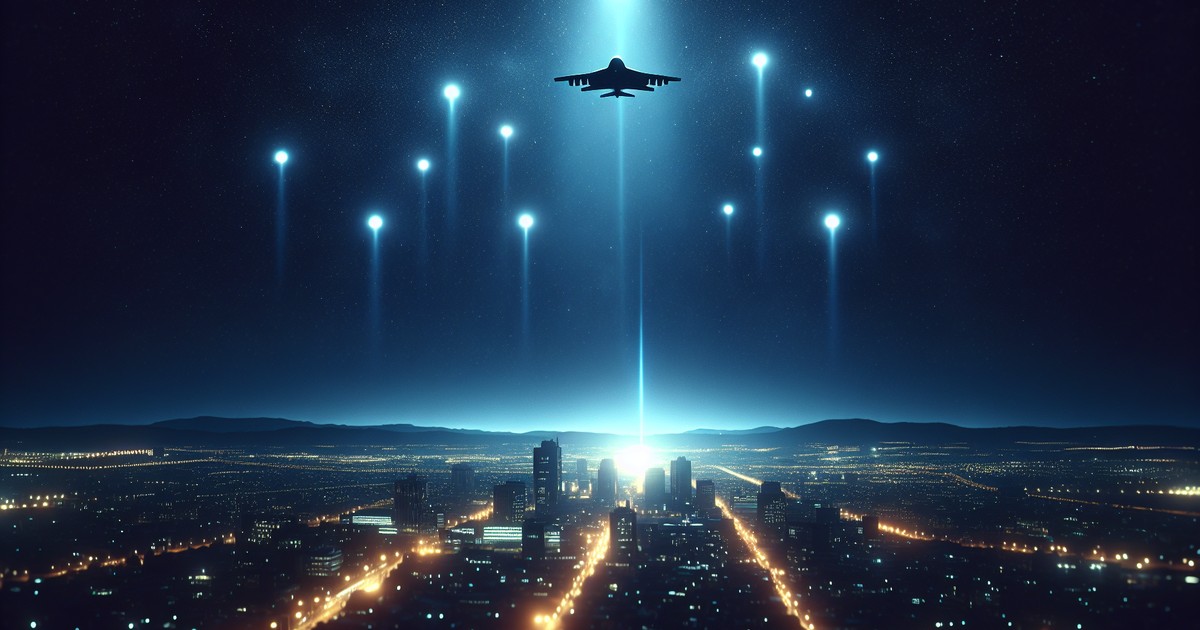
Tehran 1976: A Night That Defied Explanation
On the evening of September 19, 1976, the skies over Tehran, Iran, became the setting for one of the most compelling and well-documented UAP (Unidentified Aerial Phenomena) incidents in history. Unlike many UFO encounters shrouded in ambiguity, this event involved multiple military personnel, radar confirmation, and subsequent international scrutiny. The details of the Tehran incident offer a formidable challenge to conventional explanations and continue to provoke questions about what transpired that night.
Initial Sighting: Civilian Reports and Military Response
The incident began when the Iranian Air Force received several civilian reports of strange lights in the sky over Tehran. According to the official incident report, later declassified by the U.S. Defense Intelligence Agency (DIA), the object was described as having bright, flashing lights of different colors. Initial attempts to dismiss these reports as celestial events, such as meteors or satellites, were quickly reconsidered when the phenomena persisted and additional witnesses came forward.
Colonel (then Lieutenant) Parviz Jafari, a seasoned pilot in the Iranian Air Force, was among those scrambled to intercept the object. Jafari's account, consistent with radar data, indicated that the object was not only visible to the naked eye but also registered on radar, displaying flight capabilities far beyond any known technology at the time.
Radar Confirmation: The Unseen Becomes Unavoidable
The radar data from Mehrabad Airport and the Imperial Iranian Air Force Base corroborated Jafari's visual observations. According to the DIA report, the object exhibited extraordinary maneuverability. It could accelerate rapidly, hover, and alter its course instantaneously—capabilities that remain unmatched by modern aircraft.
During the encounter, Jafari attempted to engage the object, but his F-4 Phantom II jet experienced a series of mysterious malfunctions, including a complete loss of communication and weapons systems. As soon as he ended pursuit, these systems inexplicably returned to normal functionality. This aspect of technological interference is a recurring theme in many UAP encounters, yet it remains poorly understood and underexplored.
Official Reports: Discrepancies and Revelations
The U.S. Defense Intelligence Agency's involvement and subsequent report provided a rare glimpse into how UAP incidents were analyzed by military intelligence. The report, classified until the late 1990s, acknowledged the encounter's credibility, noting the reliability of the military witnesses and the radar confirmations. However, it stopped short of offering a definitive explanation for the phenomena.
In contrast to the DIA report, the Iranian government's official stance has varied over time, often aligning with broader geopolitical narratives when addressing the incident. This lack of consistency highlights the difficulties in obtaining transparent information on UAP encounters, particularly those involving military assets.
Witness Testimonies: Weighing Credibility
The testimonies of witnesses like Parviz Jafari lend significant weight to the Tehran incident's credibility. Jafari's detailed recounting of the event, supported by radar confirmation and other pilot accounts, challenges skeptics who might dismiss the incident as a series of misinterpretations or technical failures. Jafari has consistently maintained his account over decades, providing interviews and participating in international UAP discussions, further solidifying his credibility.
Yet, witness testimony, however credible, is often met with skepticism within scientific and military communities. The Tehran incident underscores the need for a more comprehensive approach to evaluating such encounters, integrating testimony with physical evidence and technological data.
Concluding Thoughts: An Open Case
The Tehran 1976 UAP incident remains an open case in many respects—both as a historical event and as a subject of ongoing investigation. While official documents and witness testimony provide a detailed account, they also leave significant questions unanswered. What technology could exhibit such advanced capabilities in 1976, and who was behind it?
This incident serves as a reminder of the complexities inherent in UAP investigations, where evidence often leads to more questions than answers. Tehran 1976 remains a pivotal case study in the annals of UAP phenomena, challenging our understanding and inviting continued scrutiny and research. As we delve deeper into the mysteries of UAPs, the encounter over Tehran stands as a testament to the need for openness, inquiry, and the pursuit of truth in unraveling these enigmatic phenomena.