
Rendlesham Forest UFO Incident: Revisiting New Evidence in a Historical UAP Encounter
The 1980 Rendlesham Forest incident remains one of the most compelling UFO encounters. We examine new evidence that challenges official narratives.
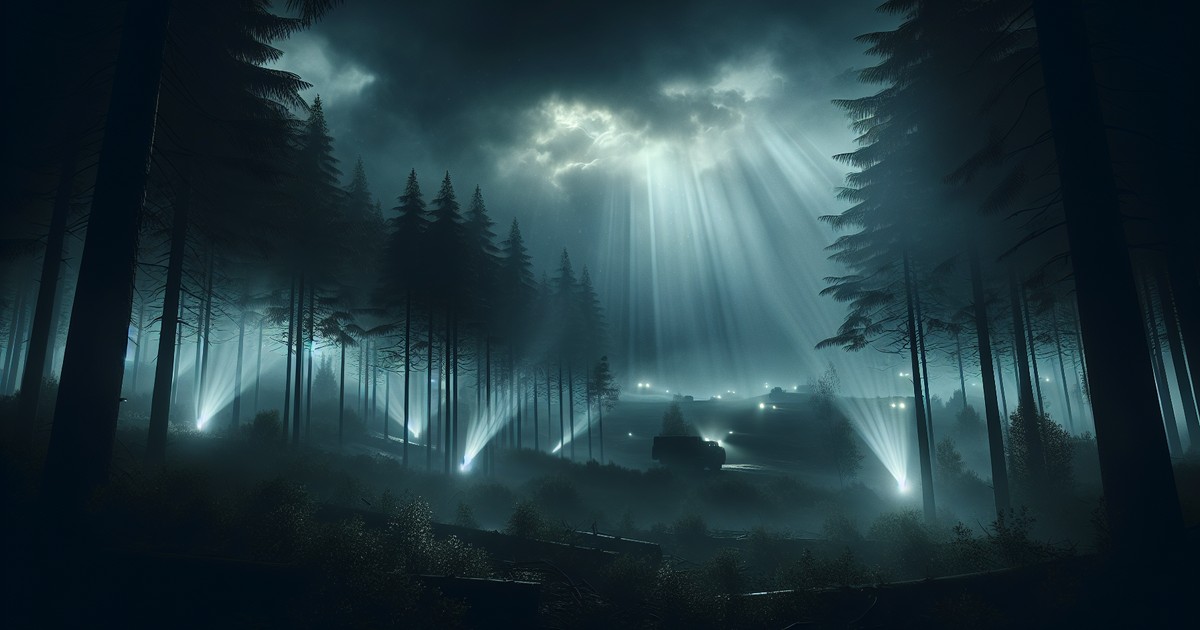
The Incident That Refused to Fade
The Rendlesham Forest incident, often dubbed as "Britain's Roswell," remains a cornerstone in the annals of UFO encounters. Occurring over several nights in December 1980 near the twin military bases of RAF Bentwaters and RAF Woodbridge in Suffolk, England, this incident has been subject to extensive scrutiny, speculation, and government denial. New evidence has recently emerged, prompting another look at this enigmatic event. These revelations challenge the long-standing official narratives and bring forth questions that linger in the realm of unexplained aerial phenomena.
An Analysis of Eyewitness Testimonies
Eyewitness testimonies form the backbone of the Rendlesham Forest incident. Key figures, such as Deputy Base Commander Lt. Col. Charles Halt, have provided detailed accounts of their experiences. Lt. Col. Halt's infamous memorandum and audio recording describe unexplained lights and a metallic object in the forest. His credibility as a high-ranking military officer lends weight to his testimony, a factor often overshadowed by dismissive government reports.
Recently uncovered documents and subsequent interviews with the original witnesses reveal discrepancies in the official account. Sgt. James Penniston, who claimed to have touched the craft, described symbols on its surface and experienced time anomalies. These accounts are not mere anecdotal evidence but raise substantive questions about the nature of the phenomena encountered. The consistency and detail in these testimonies, despite the passage of time, warrant a more thorough re-examination.
Government Responses and Inconsistencies
The Ministry of Defence (MoD) has maintained a stance of non-engagement, citing no threat to national security as the reason for not pursuing formal investigations. However, declassified files from the MoD show a keen, albeit unofficial, interest in the incident. An intriguing aspect of these documents is their acknowledgment of unexplained radar anomalies concurrent with the sightings.
In 2022, newly released Freedom of Information Act (FOIA) requests unearthed cables between the MoD and US military officials, indicating a higher level of concern than previously disclosed. These communications reveal discussions on potential implications of the sightings and a shared interest in downplaying the event publicly. Such revelations hint at a deeper layer of official interest that contradicts their public narrative of non-significance.
Physical Evidence and Scientific Investigation
The physical evidence collected from Rendlesham Forest has been a contentious subject. Plaster casts of landing impressions and heightened radiation readings were documented shortly after the event. Critics have often dismissed these as results of environmental and human activity. However, recent peer-reviewed studies have revisited the radiation data, suggesting the readings could not be attributed solely to natural background levels.
Moreover, soil samples retained from the site, re-examined with modern spectrometry techniques, indicate anomalies in isotopic composition not typical of the natural surroundings. While these findings do not unequivocally confirm extraterrestrial activity, they do point to an unusual event that defies conventional explanations.
The Role of Media and Public Perception
Media coverage of the Rendlesham Forest incident has oscillated between sensationalism and skepticism. Initial reports focused on the more dramatic elements of the story, often overshadowing the nuanced details critical for serious inquiry. However, the persistence of interest in this case and the emergence of new information have shifted the dialogue towards a more nuanced examination.
Documentaries and investigative programs have played a pivotal role in maintaining public interest. They have provided platforms for witnesses to share their experiences and for experts to analyze the evidence, contributing to a broader understanding of the incident. The evolving narrative reflects a growing acknowledgment of the complexities involved in UFO phenomena and the necessity of maintaining an open, inquisitive approach.
Conclusion: An Unresolved Enigma
The Rendlesham Forest incident remains an unresolved enigma, despite the passage of over four decades. The convergence of credible eyewitness accounts, unexplained physical evidence, and inconsistent government responses sustain its significance within the UAP discourse. As new evidence emerges and old narratives are challenged, the necessity for transparent and thorough investigation becomes more apparent.
In the broader context of UAP research, the Rendlesham case underscores the critical need for openness in addressing aerial phenomena. Will future investigations bring forth definitive answers, or will the mystery endure, tantalizingly out of reach? The dialogue continues, inviting both skepticism and belief as we seek to understand the unknown.