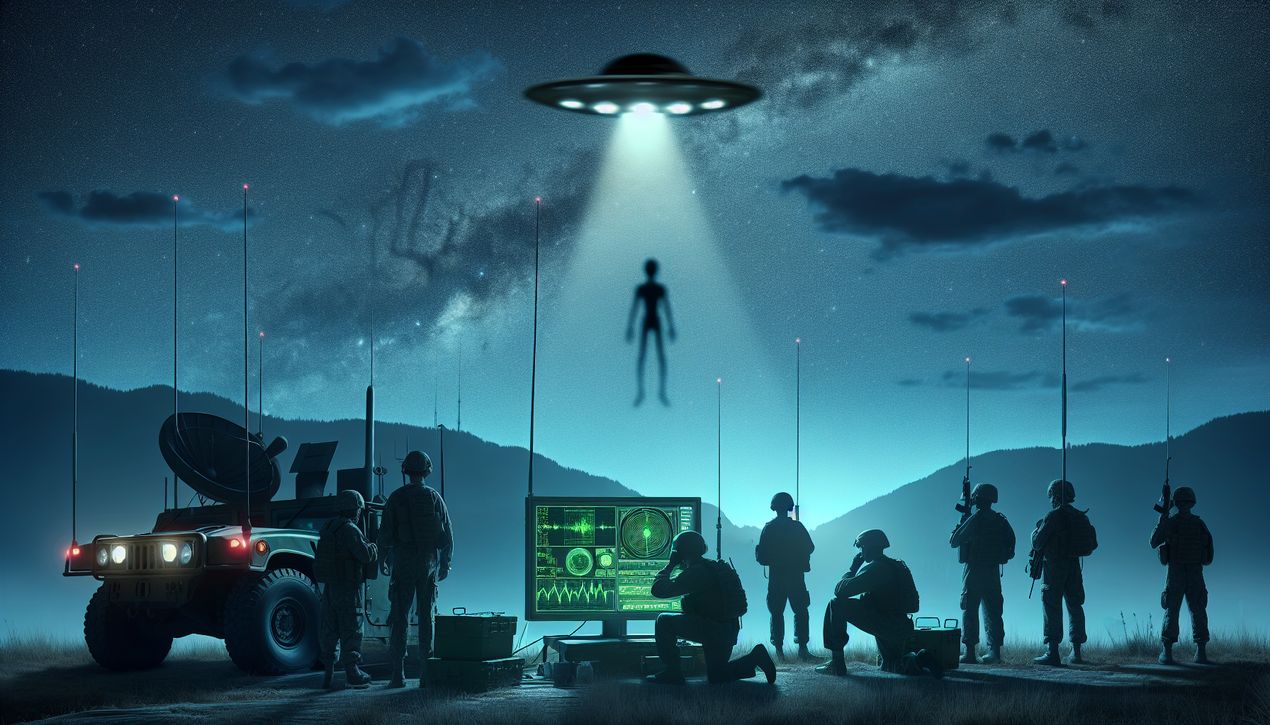
‘New Revelations from Former U.S. Intelligence Officer David Grusch’
Recently, David Grusch, a former U.S. intelligence officer turned whistleblower, has made headlines with significant claims regarding the U.S. government’s knowledge of Unidentified Aerial Phenomena (UAP). During a highly publicized interview with va
Recently, David Grusch, a former U.S. intelligence officer turned whistleblower, has made headlines with significant claims regarding the U.S. government's knowledge of Unidentified Aerial Phenomena (UAP). During a highly publicized interview with various media outlets, Grusch alleged that the government has been covering up information related to recovered non-human technology and biological entities. His statements, grounded in his experiences with the U.S. government's UAP investigation programs, have reignited discussions within both the scientific and UFO enthusiast communities.
Grusch, who previously worked for the U.S. Air Force and the National Geospatial-Intelligence Agency, asserts that there has been a systematic effort to conceal evidence and information regarding UAPs and their origins. Specifically, he claims that certain materials indicative of advanced technology have been retrieved and are being studied in secret. These assertions have garnered serious attention from lawmakers and the public alike, particularly in light of the recent U.S. Congressional hearings aimed at uncovering more about government operations concerning UAPs.
Key to Grusch's credibility is his history of involvement in intelligence operations and the backing of other former military personnel who have come forward with similar testimonies about their own encounters with UAPs. Additionally, prominent figures in the UFO research community, like Lou Elizondo and George Knapp, have supported his claims, highlighting a potential paradigm shift in how we understand governmental responses to UAP phenomena.
The implications of Grusch's allegations extend beyond mere curiosity; they raise critical ethical questions surrounding transparency and accountability within governmental institutions. The broader scientific community, represented by figures such as Dr. Avi Loeb, has pointed out that if Grusch's claims are substantiated, it could transform our understanding of both extraterrestrial life and advanced technologies currently beyond our grasp.
Moreover, these revelations coincide with a growing urgency among several U.S. Congress members to initiate further investigations into UAPs, calling for more structured inquiries and potentially larger funding for scientific research in this area. This political momentum reflects a significant change in attitudes toward UAP phenomena, shifting from marginalization to more formal investigations.
As the conversation around UAPs evolves, Grusch's testimony may serve as a pivotal moment that encourages both serious investigation and open discourse about what has historically been considered fringe or speculative. The public, now armed with new information and the support of credible figures, is increasingly demanding answers.
As we move forward, it remains to be seen how the government will respond to these calls for greater visibility and transparency and whether the scientific community can leverage this pivotal moment to advance research into the uncharted territories of UAPs. With ongoing coverage and investigation, the impact of Grusch's claims may shape the future of not only UAP investigations but also our understanding of humanity's place in the cosmos.