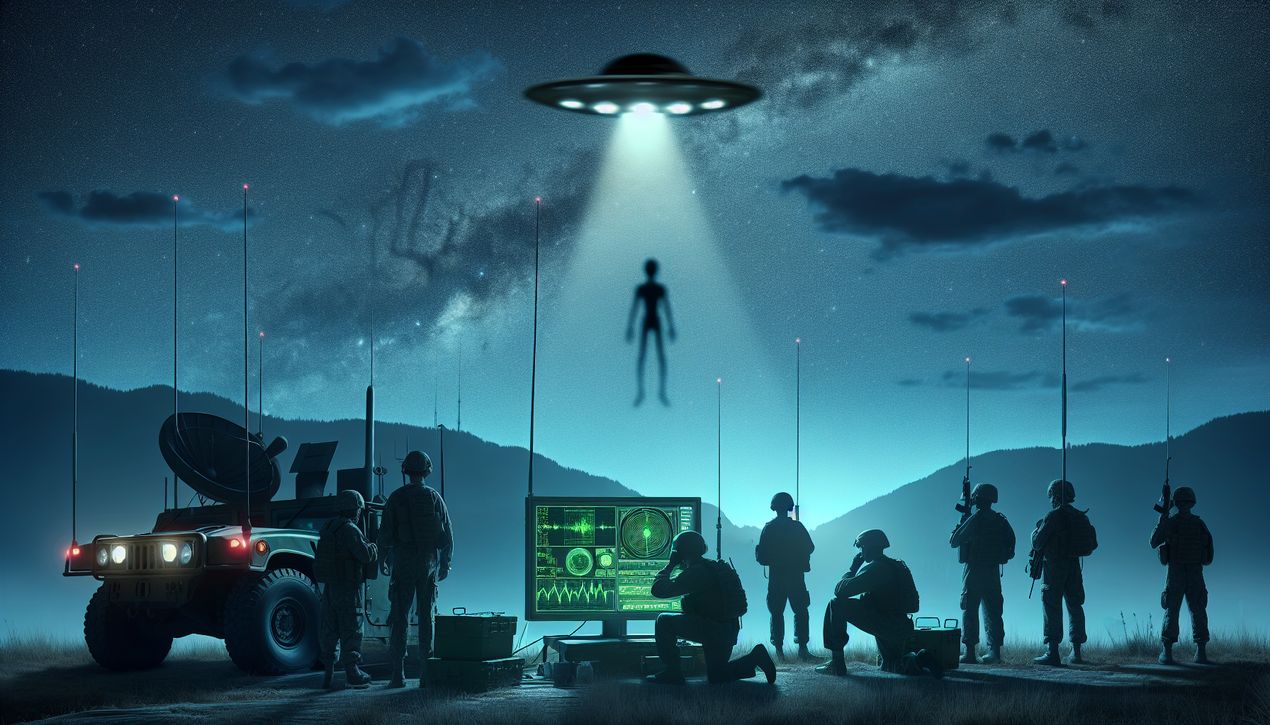
Recent Sightings Renew Interest in UAP Investigations
As the global intrigue surrounding Unidentified Aerial Phenomena (UAPs) continues to grow, recent sightings have triggered renewed investigations and discussions among experts and enthusiasts alike. Notably, a series of reports from credible witnesse

As the global intrigue surrounding Unidentified Aerial Phenomena (UAPs) continues to grow, recent sightings have triggered renewed investigations and discussions among experts and enthusiasts alike. Notably, a series of reports from credible witnesses has emerged, shedding light on the ongoing dynamics of UAP encounters.
In the past month, former U.S. Navy pilot Ryan Graves has been vocal about the frequent sightings of UAPs in the airspace over military training grounds. Graves, who has emerged as a leading advocate for transparency in UAP reporting, has emphasized the need for a systematic approach to investigating these phenomena. His comments come in light of a significant uptick in reported encounters by military personnel, suggesting that pilot safety and national security remain pertinent concerns.
During an interview, Graves spoke to the importance of collaboration between military and civilian researchers in understanding UAP phenomena. He pointed out that without adequate data collection and sharing from both sectors, any efforts to grasp the nature of these encounters will likely fall short. This sentiment aligns with viewpoints expressed by journalist George Knapp, who has long reported on UAP phenomena, advocating for deeper inquiry into government-held information and eyewitness accounts.
Building upon Graves's observations, Dr. Garry Nolan, a prominent scientist at Stanford University, has reiterated the scientific community's role in exploring UAPs. In recent talks, Dr. Nolan has advocated for rigorous analysis of any tangible evidence collected from UAP encounters. He emphasizes that even anecdotal reports from pilots and military personnel can offer valuable insights if approached scientifically.
Furthermore, Australian journalist Ross Coulthard has spotlighted recent visual evidence presented by eyewitnesses resembling previous UAP configurations observed over the past few years. Coulthard, known for his investigative journalism on UAP topics, maintains that these incidents deserve thorough examination, particularly as they challenge existing technological understandings.
A remarkable case reported this month involves a group of pilots from a private aviation firm who claimed to have witnessed a metallic object flying at high speed, exhibiting erratic motion during a routine flight. Their accounts have reinforced theories suggesting that these phenomena may not merely stem from atmospheric anomalies or misunderstandings of conventional aircraft.
On a policy level, the U.S. government's commitment to transparency regarding UAPs has shown a significant shift, with the formation of the All-domain Anomaly Resolution Office (AARO) signifying a structured approach to address these occurrences. Lou Alessandro, a notable UFO researcher, has viewed this as a positive step but calls for more rigorous investigations and public disclosure of findings.
As discussions continue and new sightings emerge, the boundary between skepticism and open inquiry becomes ever more critical. As advocates, witnesses, and scientists collaborate to draw back the curtain on UAPs, both the public's interest and the stakes in understanding these phenomena seem poised to grow. Maintaining a fact-based approach while exploring these mysteries is essential as the search for truth continues.