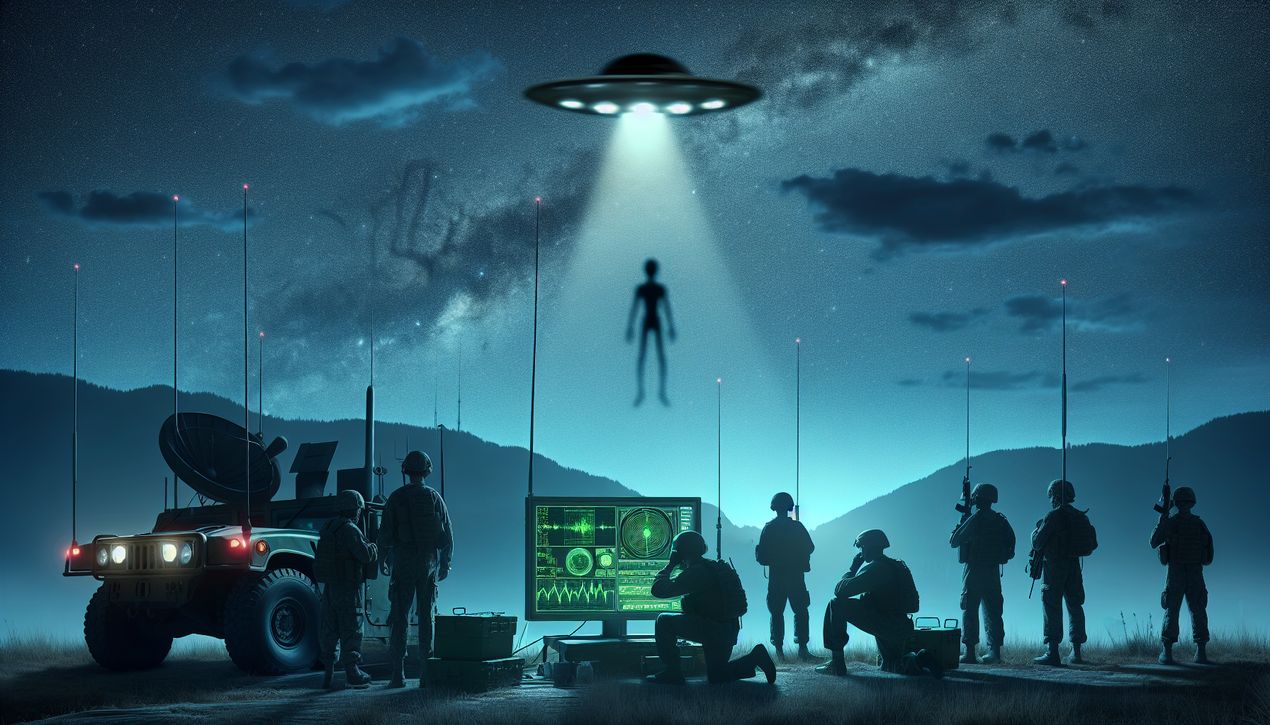
Recent Developments in the UAP Discourse: Whistleblower Testimony
The conversation surrounding Unidentified Anomalous Phenomena (UAPs) continues to evolve with the recent testimony of whistleblower David Grusch, a former intelligence official. Grusch’s claims present a pivotal moment in the ongoing discourse about

The conversation surrounding Unidentified Anomalous Phenomena (UAPs) continues to evolve with the recent testimony of whistleblower David Grusch, a former intelligence official. Grusch's claims present a pivotal moment in the ongoing discourse about UAPs and their potential implications for national security and scientific understanding.
In a recent interview, Grusch detailed his experiences related to UAPs during his tenure with the Unidentified Aerial Phenomena Task Force, which was part of the Office of the Director of National Intelligence (ODNI). He alleges that the U.S. government has not only detected UAPs but has also been involved in retrieving materials from unidentified craft. Grusch’s assertions carry significance as they align with a growing body of testimony from military personnel, including former Navy Commander David Fravor, who has gone on record describing encounters with UAPs during training missions.
The interest in UAPs increased significantly after the release of Pentagon videos showing aerial phenomena that could not be easily explained. In a recent panel discussion, Grusch touched on the need for more transparency regarding the information held by military and governmental organizations, signaling an urgent public demand for answers. This focus on accountability resonated with other notable figures in the UAP community, like journalist George Knapp, who has consistently advocated for greater inquiry into government-held secrets related to these phenomena.
Grusch’s testimony adds to the narratives presented by investigators like Jeremy Corbell and Ross Coulthard, who have documented encounters and research into the broader implications of UAP sightings. Their work has underscored the potential for further academic exploration of UAPs, merging scientific inquiry with military observation. Significant among these researchers is Dr. Avi Loeb, who posited that scientific investigations into interstellar objects could reshape our understanding of such phenomena and their origins.
The official push towards examining UAPs more closely has been met with mixed reactions from the public and scientists alike. While some embrace the opportunity for increased transparency, others remain skeptical about the government's motives in releasing information. Dr. Eric Davis has expressed caution, emphasizing the necessity of rigorous scientific methodology in investigating these reports to avoid sensationalism.
As the narrative unfolds, increasingly prominent are calls for a framework within which scientific inquiry can responsibly engage with this topic. The conversation has transitioned from mere speculation to a more structured debate involving politicians, scientists, and military personnel. Future hearings in Congress may further illuminate the facts surrounding UAPs as officials weigh the implications for airspace security and scientific advancement.
The landscape of UAP discourse is undoubtedly shifting, marked by whistleblower testimonies and an increasing demand for transparency, leaving the public intrigued about what further revelations may come. As developments continue in this sphere, the pursuit of truth remains paramount in understanding these anomalous phenomena.