Pentagon addresses UAP over UK
In a recent press briefing, Pentagon Press Secretary Major General Pat Ryder addressed growing concerns over a series of unauthorized drone incursions targeting U.S. military bases in the United Kingdom. These incidents, which have prompted questions
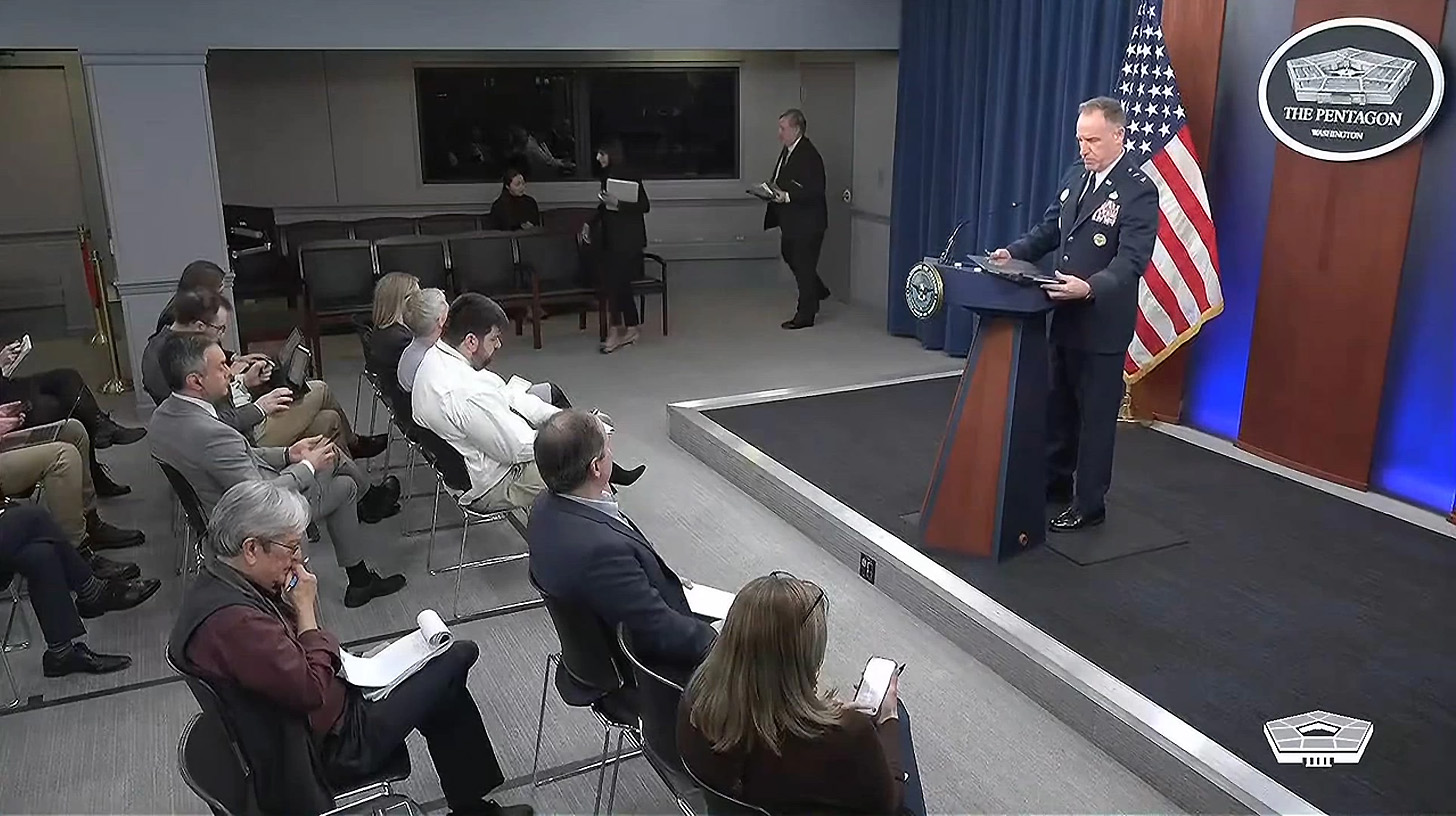
In a recent press briefing, Pentagon Press Secretary Major General Pat Ryder addressed growing concerns over a series of unauthorized drone incursions targeting U.S. military bases in the United Kingdom. These incidents, which have prompted questions about potential security risks and foreign involvement, highlight the challenges posed by the rising prevalence of small unmanned aerial systems. Ryder provided updates on ongoing investigations, measures being taken, and the broader implications of drone activity on military operations and safety. Here’s a detailed look at the exchange.
Jennifer: General Ryder, there have been a number of incidents in England involving drones swarming U.S. bases and challenging security. Do you believe these drones have hostile intent? Were they sent by a foreign adversary? What is happening? What can you tell us about these drones?
General Ryder: Jennifer, these incidents are being actively monitored. Installation leaders have determined that, so far, none of these incursions have impacted base residents, facilities, or the assets on those bases.
We're, of course, continuing to work with host nation authorities and our mission partners to ensure the safety of our personnel, facilities, and equipment. The bottom line is, this is something we take seriously. We’re continuing to investigate it. However, as of now, there has been no significant impact on our mission.
Jennifer: Why not shoot them down?
General Ryder: I won’t get into the specifics of our force protection measures. However, we always maintain the right to defend ourselves if we determine something is a threat. Again, we are continuing to work with local host nation authorities on this.
Jennifer: Do you think these incidents are linked to the drones sighted at three or four different locations last December?
General Ryder: I don’t want to speculate or draw unnecessary connections. Small unmanned aerial systems (UAS) have become relatively common across the landscape. The department has been looking closely at how they affect our facilities and personnel, whether in combat zones or elsewhere.
Regarding these specific incidents in the U.K. versus those in the U.S., I don’t want to suggest there’s a connection at this point.
Jennifer: These drones don’t appear to be operated by hobbyists. Is that correct?
General Ryder: It would be premature to draw any conclusions. It’s entirely possible they could be hobbyists or something else. We just need to look into it further.
Unidentified Reporter: Thank you, sir. Have there been any domestic drone incidents since October?
General Ryder: That’s a hard question to answer, Jen, because on any given day, someone like me—Pat Ryder, hobbyist drone pilot—can fly a drone near a base. It’s in and out. Is that a drone incident?
Or are we talking about something more serious, like the Langley incident, where multiple drones operated over a facility for days? I don’t have statistics in front of me, but the reality is that small aircraft are now ubiquitous across the U.S. and the world.
I have a close relative who is a drone pilot. He flies his drone for amateur photography. If that drone gets blown off course or carried too close to a facility by the wind, or if he doesn’t understand FAA rules, it could cause concern.
This is something the Department of Defense, FAA, and others are examining closely in this modern era of small aircraft. We need to ensure we responsibly protect our assets without assuming every single aircraft is a threat.
General Ryder: Thank you.