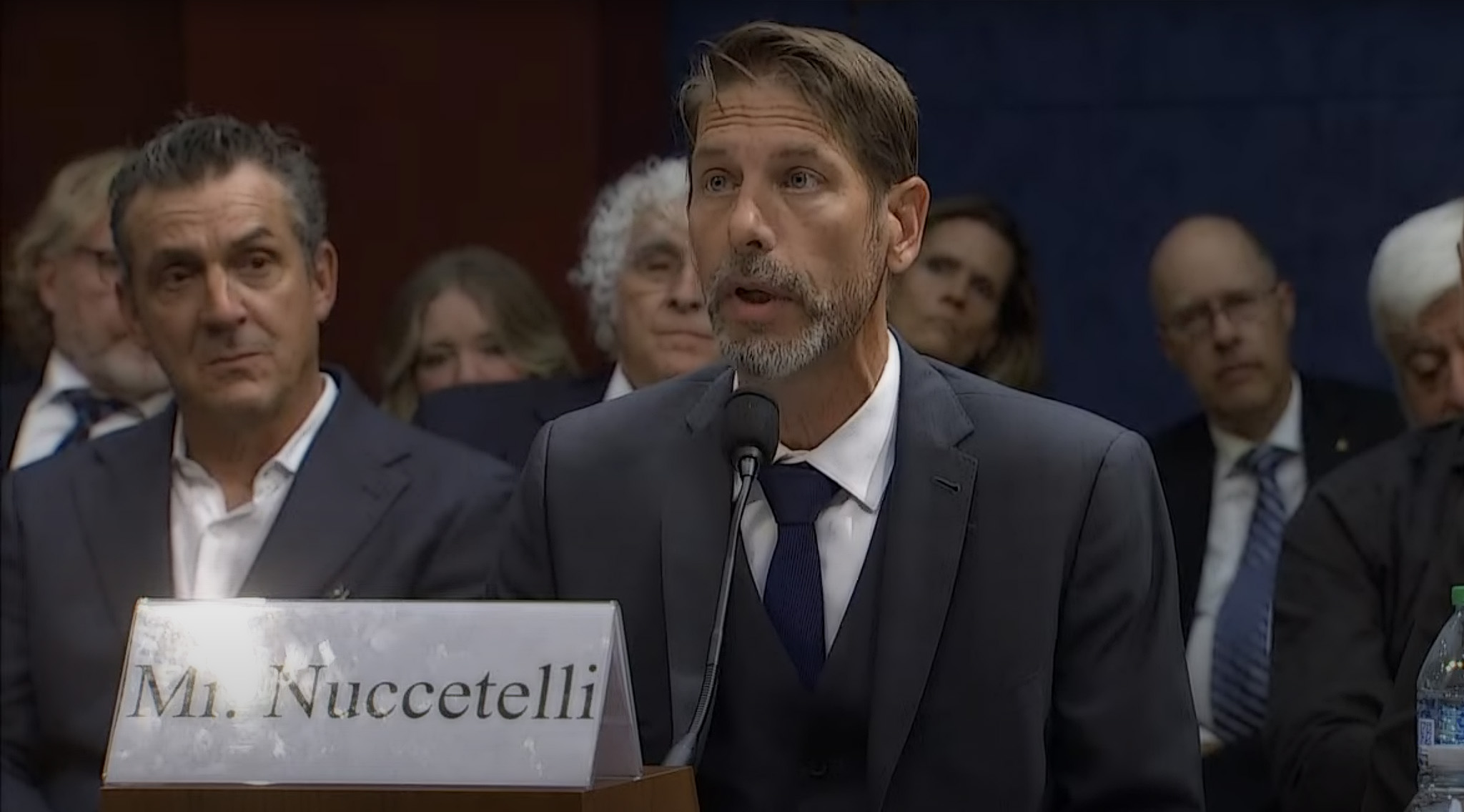
Bob Lazar, Element 115, and the Enduring Mystery Behind His Claims
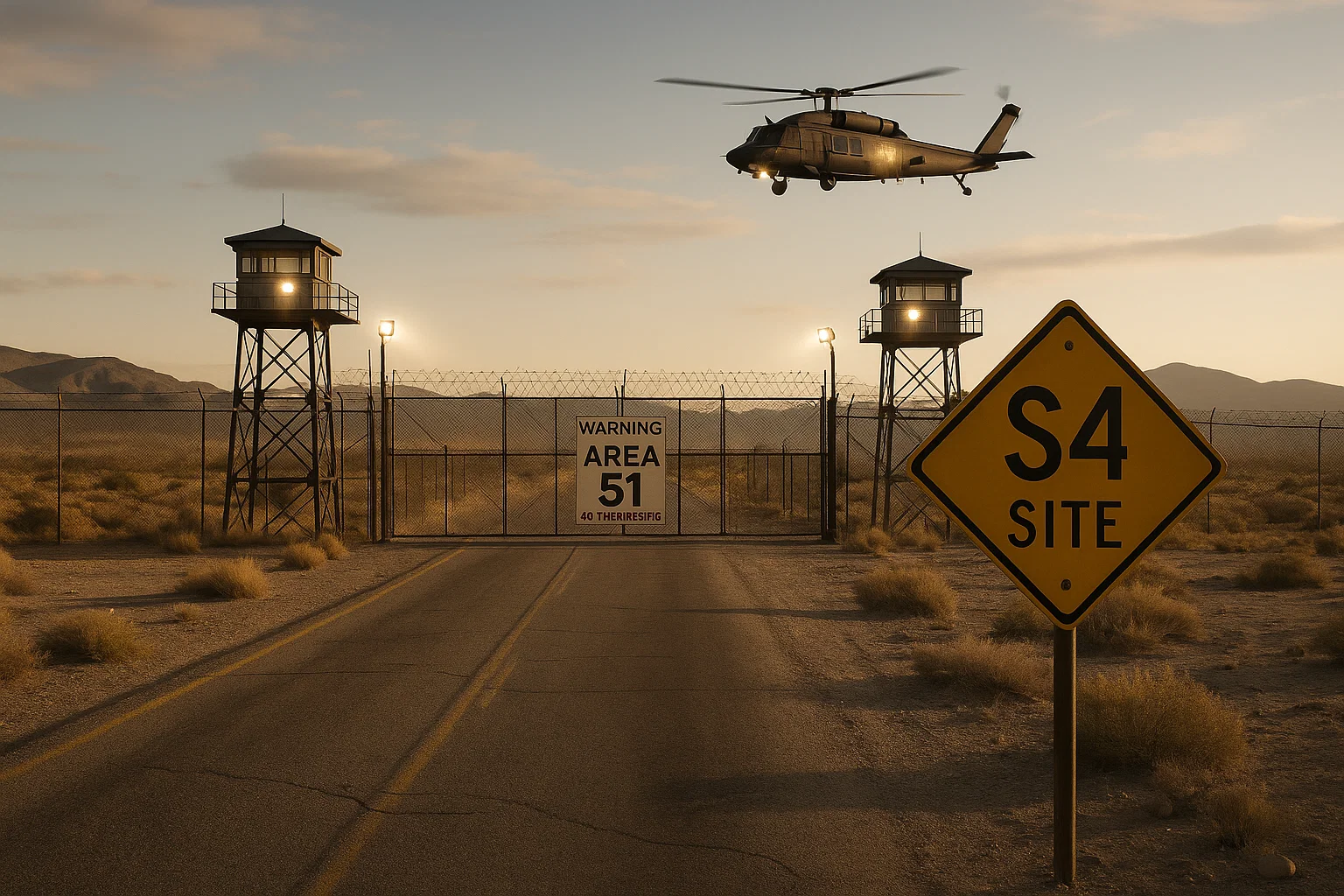
Lead:In 1989, a soft-spoken technician named Robert “Bob” Lazar went on Las Vegas television and said he’d worked at a secret facility called S-4 south of Area 51, reverse-engineering nine craft of non-human origin. The fuel, he said, was a then-unkn
Lead:
In 1989, a soft-spoken technician named Robert “Bob” Lazar went on Las Vegas television and said he’d worked at a secret facility called S-4 south of Area 51, reverse-engineering nine craft of non-human origin. The fuel, he said, was a then-unknown “Element 115” capable of bending gravity itself. Three decades later, Element 115 is indeed on the periodic table—now called moscovium —but what modern science has made of it diverges sharply from what Lazar described.
The Lazar story that put Area 51 on the map
Lazar first appeared anonymously on KLAS-TV’s I-Team with reporter George Knapp, claiming access to briefings on extraterrestrial craft and describing a “Sport Model” saucer powered by a compact reactor and a gravity-wave amplifier. He later revealed his name on-air, a broadcast that helped thrust Area 51 into global pop culture. YouTubeNevada Public Radio
Part of Lazar’s credibility in the eyes of supporters hinged on his background. He has said he studied at MIT and Caltech and worked at the Los Alamos Meson Physics Facility; a 1982 Los Alamos Monitor feature even referred to him as a physicist while profiling his jet-car hobby. But institutions have repeatedly said they have no records confirming the degrees he claims, and Los Alamos has stated it has no direct employment record for him; independent researchers have since found evidence he likely worked there via a contractor. In short, the paper trail remains contested. OtherHandWikipedia
Today Lazar runs United Nuclear Scientific Equipment & Supplies in Michigan and still occasionally surfaces in media—most prominently in Jeremy Corbell’s 2018 documentary Bob Lazar: Area 51 & Flying Saucers—and in coverage of a 2019 multi-agency raid at his business that, according to reporting, was tied to a thallium poisoning investigation (not to any “alien fuel”). (https://unitednuclear.com/?utm_source=chatgpt.com)[IMDb](https://www.imdb.com/title/tt9107368/?utm_source=chatgpt.com)[VICE](https://www.vice.com/en/article/bob-lazar-says-the-fbi-raided-him-to-seize-area-51s-alien-fuel-the-truth-is-weirder/?utm_source=chatgpt.com)
What Lazar said about “Element 115”
In those early interviews, Lazar asserted that the craft he worked on were fueled by a stable isotope of Element 115. When bombarded with protons, he said, it produced a unique reaction that generated a gravity-A wave, allowing the saucer to “fall” in the direction of travel—essentially a controlled warping of spacetime. At the time, Element 115 had not yet been synthesized in a lab, though its place on the periodic table had long been predicted by nuclear theory. YouTubeWikipedia
What scientists actually discovered: moscovium (Mc), element 115
In 2003, a joint Russian-U.S. team at the Joint Institute for Nuclear Research (Dubna) and Lawrence Livermore National Laboratory synthesized the first atoms of element 115 by bombarding americium-243 with calcium-48. Subsequent work confirmed the find, and in 2016 the element was officially named moscovium (Mc) by IUPAC. Lawrence Livermore National Laboratory(https://www.jinr.ru/publish/Preprints/2003/178%28E7-2003-178%29.pdf?utm_source=chatgpt.com)[IUPAC+1](https://iupac.org/wp-content/uploads/2016/11/Press-Release_Names-Four-New-Elements_30November2016.pdf?utm_source=chatgpt.com)
Here’s the crucial part: every known isotope of moscovium is extremely short-lived , with half-lives measured in milliseconds to fractions of a second. No stable isotope has been observed, and none is known to occur in nature. That makes moscovium useful for basic research in nuclear physics, not as a practical power source. WikipediaEBSCO
Scientists do discuss a theoretical “island of stability ” for superheavy elements—nuclei near certain “magic” numbers of protons and neutrons that might live longer than their neighbors—but those isotopes remain hypothetical. The moscovium isotopes we can actually make decay almost instantly. Royal Society of Chemistry
So…did Element 115 “prove Lazar right”?
The short answer is no —at least not on the technical core of his propulsion claim.
- Yes , element 115 exists and was named moscovium in 2016. That outcome, however, flowed from standard periodic-table predictions and decades of superheavy-element research, not from whistleblower testimony. IUPACLawrence Livermore National Laboratory
- No , scientists have not produced a stable isotope of moscovium, nor anything close to the kind of long-lived material that could be machined into reactor fuel. Known isotopes decay in milliseconds to ≤1 second. EBSCOWikipedia
- No published research shows moscovium yielding exotic gravity effects or functioning as an energy source, as Lazar alleged. Mainstream experiments are limited to detecting a few atoms and measuring their decay chains. (https://www.jinr.ru/publish/Preprints/2003/178%28E7-2003-178%29.pdf?utm_source=chatgpt.com)[CERN Document Server](https://cds.cern.ch/record/677364?utm_source=chatgpt.com)
Advocates often argue that the eventual appearance of “115” on the periodic table vindicates Lazar in essence. But the specifics matter: Lazar’s claim depended on a stable 115 with extraordinary properties. Modern nuclear science has found the opposite—extreme instability —and nothing in the peer-reviewed record supports the physics he described. WikipediaEBSCO
Cultural impact that won’t fade
Whether you view Lazar as a hoaxer, a garbled whistleblower, or something in between, there’s no denying his influence. His 1989 reveal helped transform Area 51 from a whispered rumor into a fixture of American mythology, and his Element 115 motif continues to animate documentaries, podcasts, and debates within UFOlogy. The KLAS-TV anniversary retrospectives underscore how one local interview reshaped the conversation around secrecy in Nevada’s desert. YouTubeNevada Public Radio
Bottom line
Bob Lazar’s story remains one of the most consequential—and controversial—chapters in modern UFO lore. Element 115 does exist as moscovium , but not in the form or with the properties Lazar claimed. Until science demonstrates a stable isotope with the extraordinary behaviors he described, the technical heart of his assertion remains unproven —even as the legend it sparked continues to ripple through the disclosure era.
Counterpoint: Non-replication isn’t disproof
The absence of a stable isotope of element 115 in the public literature doesn’t, by itself, falsify Lazar’s claims. Three points keep the door ajar:
- Asymmetric reverse-engineering: Human labs struggling to reproduce an effect says as much about our current toolset as it does about the phenomenon. A 1950s lab couldn’t have fabricated a modern integrated circuit either; capability gaps are real.
- Nuclear theory leaves room (in principle): Superheavy-element models predict longer-lived “islands of stability.” While no stable moscovium isotope has been observed, the theoretical landscape doesn’t rule out a long-lived nuclide that’s out of reach with today’s accelerators—or sourced non-terrestrially.
- Secrecy complicates the record: If truly exotic material exists only within compartmentalized programs, it wouldn’t appear in the open, peer-reviewed canon. History shows that transformative technologies (from radar countermeasures to stealth) can remain classified for years.
Bonus Bottom line: Extraordinary claims still demand extraordinary evidence—chain-of-custody material, isotopic analyses, repeatable measurements. But until science can survey all possibilities (including ones beyond our current production methods), non-replication is not a silver bullet against Lazar; it’s a snapshot of where our publicly known technology stands today.