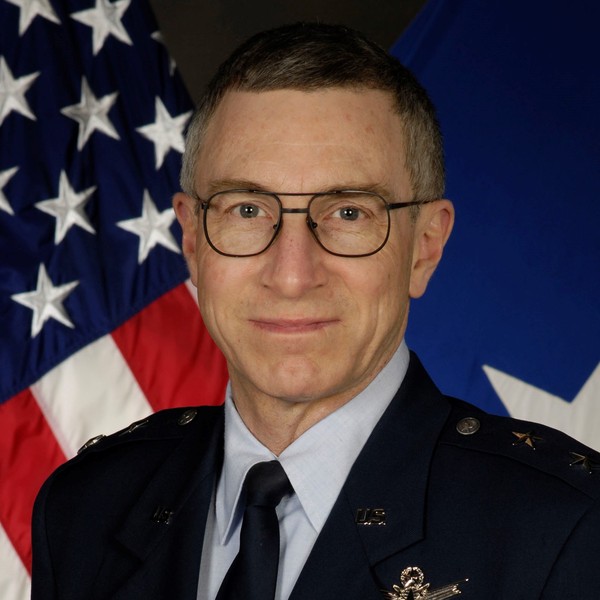
William Neil McCasland: The Former AFRL Director Who Shaped UAP Discourse
Uncovering William Neil McCasland's legacy in UAP research and how his contributions continue to influence today's discourse.
Unraveling the Legacy of William Neil McCasland
In the shadowy corridors of government and military institutions, few figures have left as profound a mark on the UAP discourse as William Neil McCasland. As the former Director of the Air Force Research Laboratory (AFRL), McCasland played a pivotal role in shaping the military's approach to unexplained aerial phenomena. Yet, despite his significant contributions, his sudden disappearance in 2026 has left a gap that continues to intrigue and unsettle both the UAP community and the general public.
McCasland's Pivotal Contributions to UAP Research
During his tenure at the AFRL, McCasland was at the forefront of integrating cutting-edge technology with aerospace research, which indirectly influenced the study of UAPs. His leadership emphasized the importance of technological advancements in understanding anomalies observed in the skies. Notably, McCasland's commitment to radar and sensor technology development provided the military with tools that have been instrumental in capturing and verifying UAP encounters, much like those highlighted in UAP Radar Signatures: Unveiling Anomalous Tracks in UFO Encounters.
The AFRL Under McCasland: A Focus on Aerospace Anomalies
William Neil McCasland's tenure saw the AFRL delve deeper into aerospace anomalies, a focus that aligned with the increasing number of UAP sightings reported by military personnel. His efforts were not isolated; they resonated with global initiatives to understand and address UAP phenomena, akin to the experiences and investigations by other military entities as explored in International Military Pilots Share UAP Witness Testimony: A Global Perspective.
The Influence of McCasland's Work Today
McCasland's work laid the groundwork for contemporary UAP investigations. His emphasis on empirical data and scientific inquiry continues to influence how military and civilian researchers approach UAP phenomena. The AFRL's enhanced capabilities in data collection and analysis can be traced back to the frameworks established during his leadership. These advancements have enabled more rigorous investigations into UAPs, contributing to a better-informed discourse that challenges public skepticism and government transparency.
The Disappearance That Left Unanswered Questions
In 2026, McCasland's sudden disappearance raised eyebrows and sparked numerous theories, ranging from voluntary seclusion to more ominous possibilities. While the official narrative remains elusive, the absence of definitive answers parallels other mysterious disappearances, such as The Disappearance of Melissa Casias: Unraveling a Los Alamos Enigma. McCasland's vanishing act has only deepened the intrigue surrounding his life and work, leaving the UAP community to grapple with the implications.
A Lasting Impact on UAP and Aerospace Research
William Neil McCasland's legacy in the UAP field is undeniable. His influence extends beyond the AFRL and into broader conversations about military preparedness and the scientific exploration of the unknown. As we continue to encounter unexplained phenomena, McCasland's contributions remind us of the critical importance of maintaining a curious, yet skeptical, approach to understanding our universe.
In conclusion, McCasland's story is a testament to the complex interplay between science, military interests, and the enduring mystery of UAPs. His contributions have not only advanced technological capabilities but have also encouraged an open-minded pursuit of knowledge in the face of uncertainty. As new developments unfold, his legacy will undoubtedly continue to shape the narrative and inspire future generations of researchers and enthusiasts alike.
About this person