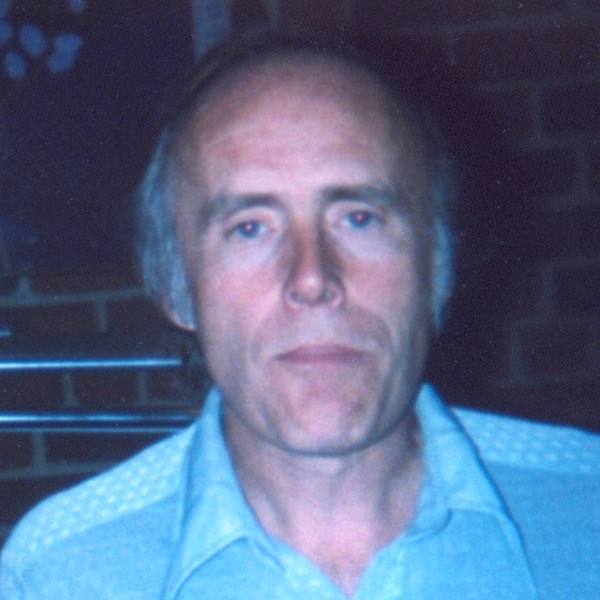
Dr. Bruce Maccabee: The Navy Physicist Who Brought Scientific Rigor to UFO Film Analysis
Exploring Dr. Bruce Maccabee's crucial role in applying scientific analysis to UAP film, and why his methods continue to influence the field today.
Introduction: The Intersection of Science and Mystery
Dr. Bruce Maccabee, a respected optical physicist for the U.S. Navy, has played a pivotal role in the scientific analysis of Unidentified Aerial Phenomena (UAP) film footage. His work, primarily in the latter half of the 20th century and into the 2000s, has provided a foundation for understanding these elusive phenomena through a scientific lens. In an age where sensationalism often overshadows evidence, Maccabee’s methodical approach remains a touchstone for contemporary UAP research.
Pioneering UAP Film Analysis
Dr. Maccabee's journey into the realm of UAPs began in the 1970s, a period rife with public intrigue about UFOs. As an optical physicist, his skills were uniquely suited to analyzing photographic evidence, a task fraught with challenges due to the often low-quality and ambiguous nature of the footage. Maccabee's involvement in the analysis of the 1976 Tehran UFO incident, widely considered one of the most documented UAP encounters, underscored his commitment to rigorous scientific scrutiny (Tehran 1976: Analyzing the Most Documented Government UAP Encounter).
The Evolution of UAP Documentation
Maccabee’s work was instrumental in transitioning the field from anecdotal reports to data-driven analysis. His careful examination of the infamous 1980s Gulf Breeze sightings demonstrated how photometric techniques could be applied to determine the authenticity and characteristics of UAP images. Despite controversies surrounding these sightings, Maccabee's scientific approach brought a level of credibility that was often lacking in public discourse.
Impact on Contemporary UAP Studies
The legacy of Maccabee's work is evident in the ongoing efforts to understand UAP phenomena through technology and detailed analysis. His methods have influenced modern investigations, such as those conducted by the AARO under Dr. Sean Kirkpatrick (Dr. Sean Kirkpatrick: AARO's Founding Director and His Enduring Impact on UAP Investigations). The application of advanced optical and radar analysis in these studies echoes Maccabee’s early work, demonstrating the enduring value of his scientific contributions.
Maccabee's Legacy and the Future of UAP Research
While Dr. Maccabee has retired from active research, his influence persists. His analytical framework is evident in how current UAP inquiries seek to balance witness testimony with empirical evidence. This approach is crucial as military and civilian agencies alike continue to grapple with unexplained aerial phenomena (Air Traffic Controller UAP Observations: Eyewitness Testimony and Radar Corroboration).
Conclusion: Bridging the Known and the Unknown
As we look forward, the question remains: how will the scientific community build upon the foundation laid by pioneers like Dr. Maccabee? His career exemplifies the necessity of integrating rigorous scientific methods into UAP research, a practice that ensures credibility and advancement in understanding these enigmatic phenomena. In an era where misinformation can easily obscure facts, Maccabee's work is a reminder of the power of science to illuminate the shadows of the unknown.
About this person